Are YOU an avatar?

By now, practically everyone has seen the blockbuster movie “Avatar.” The special effects, the lush rainforest foliage, the terrifying wildlife and the 3D experience were absolutely spectacular; if you saw the movie in an IMAX theater, even more awesome. But with all that visual stimulation, you might have overlooked the real beauty of this movie: You might not have recognized your own reality, cloaked as cinematic fantasy.

If you’re among those who believe that we are spirits having a physical experience, the symbolism in “Avatar” didn’t escape you. Just as the consciousness of characters Jake Sully and Dr. Grace Augustine shifted out of their human bodies into their avatars when their bodies slept, spiritual masters believe that our consciousness also leaves our physical bodies and enters other dimensions when we sleep. We perceive those other-worldly experiences as “dreams.”

Have you ever vividly remembered the sights and sounds of a dream experience, particularly a frightening, mysterious, exciting or joyful one? What if our dream experiences are just as “real” as our waking experiences?

What if we are avatars? By day, we “live” on planet Earth and by night, in a dimension where we can instantly transport ourselves through time and space by merely thinking? (You have noticed that you have that magical ability in your dreams, right?)

What if the only difference between us and the three avatar drivers on Pandora is that they were fully conscious of who they were, what they were doing and why they were doing it—and we are not? What if, like Jake Sully, our souls entered a tiny human avatar on this planet? Each soul had a specific and distinct mission—rarely as daunting as protecting a people and their way of life from ruthless invaders, but a mission that was significant to our souls’ evolutionary growth?

Unlike Sully, however, because we are not consciously aware of our true identity, we haven’t a clue why we’re here and what we came to accomplish in a finite period of time. That makes the Earth experience tremendously more challenging. Those who volunteer for its Avatar Program are nothing short of remarkable.

Heck, practically any trained warrior—even Jake Sully, who wasn’t the sharpest knife in the drawer—can use his ground combat training to outsmart bad guys and ferocious beasts. But what if Sully had no memory that he had been one of the few, the proud, the Marines?

Picture this: What if Sully’s genetically engineered avatar also came equipped with an ego and five senses that operated on a totally different frequency than his authentic Self, and it had free will to think and do anything it pleased? What if he didn’t have full control of his avatar’s thoughts or movements? With a scenario such as this, could he have survived that first night alone on Pandora?

If you aren’t seeing any parallels yet, let me ask you this: What if, instead of being open to the Na’vi people’s belief that every living thing is spiritually connected and supported, Sully adopted the beliefs and attitudes of his forceful ego and five senses? His ego insists that he is a separate and more superior life form—and that he has dominion over the other life forms. Could an ego-driven Jake Sully have saved Pandora’s indigenous Na’vi civilization and their sacred ground?

This isn’t a test. There is no right or wrong answer to these questions. The important thing is that you look behind the curtain of what we call real life, and examine all the possibilities and unborn potential in the props and characters lurking there.

Be creative! Tell your own story. Envision your physical body as a human avatar. Within it is an eternal life form that is part of and directly connected to the Source of all Life. It holds the answers to all your questions, is fully accessible to you 24/7, is infinitely patient, unconditionally loving, and totally forgiving.

Would your life be different if you initiated and nurtured a relationship with the all-knowing, eternal part of your being? What if you trusted it enough to surrender control of your avatar? Could you do that?

Close your eyes; take in the entire picture. Experience the vivid sights and sounds in “Real” 3D. What did your life look like when you relinquished control to the Source that we call God? How did your body feel? Were you breathing more deeply and feeling more peaceful because you trusted that God would always work out every situation in your best interest? Or were you tense and fearful? Was there a knot in your stomach because you (your ego-self ) was not in control of your body and your life?

Play with it. Have fun discovering more about yourself. I hope you’ll share your discoveries below. (If you want to remain anonymous, simply use initials–yours or someone else’s!)
Valentine, there’s absolutely nothing wrong with you

I was stunned and saddened earlier this week to receive a Facebook invitation to a workshop that proclaimed, “If you do not have money constantly circulating in your life, there is something radically wrong with you.” The invitation was from a minister who practices the teachings of Jesus. 

This young man is an indisputably beautiful person whom I genuinely love, and my intent is not to disparage him in any way. But admittedly, I was so surprised by his declaration that the Loud Mouth within me succumbed to the lure of the empty comment box beneath the invitation in about a nanosecond, immediately questioning the judgmental nature of his marketing message.

Scripture tells us that Jesus believed that absolutely nothing was wrong with the blind beggar. As far as Jesus was concerned, the man, who had been blind since birth, had done nothing wrong and neither had his parents, as presumed by the curious disciples.

“Neither this man nor his parents sinned,” said Jesus, “but this happened so that the work of God might be displayed in his life.” John 9:2-3 (NIV) I could be wrong; but it seems to me that Jesus’s lesson here was that all physical conditions—even those perceived by humans to be negative, disadvantaged or disabling—serve God’s purpose.

Scripturally, God is Love 1 John 4:8 (NIV), and “Love is patient, love is kind. It does not envy, it does not boast, it is not proud. It is not rude, it is not self-seeking, it is not easily angered, it keeps no record of wrongs.” 1 Cor 13:4-5 (NIV) When I connect those dots, it means that God’s purpose is not to harm us, and every condition benefits us in some way. Of course, this directly contradicts Exodus 20:5, the scripture to which Jesus’s disciples had referred, a scripture that claims that God unfairly punishes children for their parents’ and ancestors’ wrongdoing.

As far as I’m concerned, God is good all the time, and all the time God is good. Holding to that principle, scriptures that portray God as sadistic fall through my strainer and into the disposal; however, I honor others’ right to capture those images of an angry vindictive God in their bowls and cling to them. Similarly, I respect those who believe that material prosperity reflects a heightened level of spiritual consciousness. To me, they’re on different planes, parallel and distinct. 

Investing time and energy in the acquisition of the temporary tangibles of planet Earth distracts us from the real reason we are here. However, I give loving allowance for others to hold a different belief. I’m even open to seeing proof that we can learn the lessons necessary to raise our spiritual consciousness if we’re focused on boosting our cash consciousness.

Just as we have different beliefs, we all have different styles of learning. I generally learn better when I’m paying attention to my teacher, reading the appropriate texts, questioning things that don’t make sense, and doing my homework. For example, I don’t believe that I can learn chemistry by studying English literature. 

When it comes to prosperity and spirituality, I actually learned and evolved more when I was broke. Guess it’s my learning style. When my life was out of my control, I found that I was more motivated to seek Truth. Before then, I was too busy enjoying the big house with the circular drive, luxury cars and in-ground pool to ask the important questions and receive the answers that eventually brought me a more dynamic, enduring level of prosperity and priceless inner peace. In fact, I’m beginning to suspect that it was the inner peace and unconditional trust that whatever I was experiencing was for my Highest Good that attracted more bounty than I ever did through  creative visualizations or 40-day prosperity programs. I’ve tried them, so I know of what I speak.

As Proverbs 4:7 (KJV) says, “Wisdom is the principal thing; therefore get wisdom: and with all thy getting, get understanding.” It is one of my guiding principals. I trust it as unwaveringly as I trust God’s love. To deeply understand something, we must research; we must ask probing questions, not simply accept other folks’ answers. In this instance, my question was: Is my agitated response to the prosperity workshop invitation due to the minister’s lack of understanding—or my own?

If I’ve learned only one thing in my quest for spiritual truth, it’s that I’m better served by paying less attention to other people’s actions and more attention to my reactions. After all, I will not be held accountable for the way others act, only how I react.

With that in mind, there was only one thing to do: Examine this situation under the loving light of the Christ. I always begin with the premise that all dramas and all actors are playing in my theater for one reason only: to support my spiritual enlightenment. Consequently, I always begin with two questions: Why did I invite this scenario? How does it serve me?

Then I delve into the scenario-specific details. In this case: Does the concept of prosperity workshops annoy me? Truly. Am I disturbed by the idea that something is “radically wrong” with me if I don’t have positive cash flow? No question about it.

The next step takes circles back to the beginning: Why did I invite this scenario, and how does it serve me? Once asked, the answers always come—rarely immediate, but always on time. In this case, it took about a day; but, as usual, it was worth the wait.

I discovered that neither the workshops nor the “something is radically wrong with you” edict was at the heart of my discontent. When Spirit allowed me to sit in the balcony and watching the drama performed under the loving light of the Christ, I was blown away by what was revealed: The message in the invitation mirrored a judgmental, condescending and manipulative aspect of my own ego that I needed to confront and heal. Surprise, surprise, the problem was mine!

I couldn’t have gotten better news. Here’s the deal: I can’t control others’ actions, reactions, thoughts or beliefs; but I can control my own. Once I own the problem, I can shape the outcome. I have the authority and ability to change any aspect of it that I desire.

How empowering, how liberating, how exhilarating! Whoo hoo! Spirit had revealed the lesson and the blessing of the workshop invitation—a very generous gift for which I am eternally grateful.

Now the transformative work can begin: I must accept full responsibility for healing this aspect of my ego self. I must agree to be consciously aware of the lesson learned here because more scenes like it will encore on my stage. I must embrace each scenario as an opportunity to rehearse a more enlightened response, so that one day I can lovingly bring down the curtain on it and all dramas that hold no entertainment value.

The most important lesson I’ve learned through these spiritual epiphanies is that I must remember that I am not simply in the Light, I am the Light. For that, I love myself unconditionally. You are not simply in the Light. You are the Light. For that, I love you unconditionally.

What better day than Valentine’s Day to affirm and stand firm in our love for ourselves? What better day to know that just because money is not lounging in our bank accounts doesn’t meant that it’s not constantly flowing through our lives? There is only One Life and we’re in it.

What better day than this day to remember that no matter what anyone says, there is absolutely nothing wrong with us! Even if we don’t know where our next meal is coming from and can’t pay our rent or mortgage, the radical truth is that there is no spot where God is not. We are worthy of God’s presence. God is with us always–in the urban homeless shelter and the suburban mansion, in the unemployment check and the Wall Street bonus.

God is equally present and equally loving. God doesn’t love one child more or less  than another. No one is highly favored. What you possess is no measure of God’s love. If you want more, simply step onto that glorious path called Self Love. 

Have a divine Valentine’s Day!

Peek-a-Boo!

It’s amazing how long fables live on Earth and in Cyberspace. Five years after I first blogged about this attempt to manipulate (i.e. frighten) the Faithful, it landed in my e-mailbox again. Let me repeat myself…
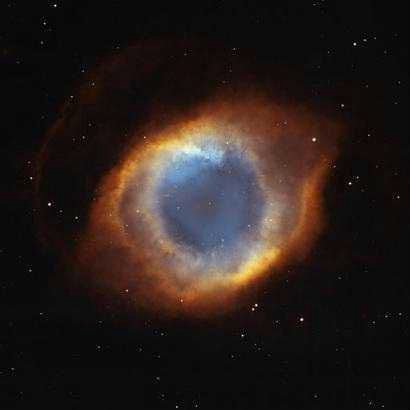
Maybe you’ve already received this image of the nighttime sky in an e-mail message. If not, take a wild guess at what that eerie looking object in the heavens might be.

Need a hint? Well, according to the originator of the e-mail, this image was captured by NASA. You know the Loud Mouth in the Balcony had a lifetime as a  journalist, so I had to fact-check.  

Lo and behold, it was true! NASA is the image’s source; I think you’ll agree that it’s a highly credible source.  

Now what do you think the e-mail said that NASA called this image? Take a wild guess.  

Uh huh. The Eye of God. Now if we believe that, all we have to do is figure out whether God is winking at us, which explains why we can’t see the other eye, or if “He” (pardon my limiting masculine pronoun) is the mythical one-eyed Cyclops. Oh yeah, and where is God hiding the rest of “His” face and body?  

Obviously, the sleuths at snopes.com had wondered the same thing. This is what they discovered:  

“This is a real photograph of the Helix Nebula, although it’s technically not a single photograph but rather a composite image formed from several photographs taken by NASA’s orbiting Hubble Space Telescope and a land-based telescope at the Kitt Peak National Observatory near Tucson, Arizona.   

“This image was NASA’s “Astronomy Picture of the Day” for 10 May 2003. The tinting of the image is artificial; the Helix Nebula does not naturally appear with the colors shown above. The picture’s ‘Eye of God’ appellation is a title coined by an admirer of the photo due to the nebula’s resemblance to a human eye, not something designated by NASA. The nebula is also visible all the time, not merely ‘once in 3000 years’.”  

 Of course, the e-mail didn’t mention any of these critical details. Instead, it added that un-Christlike Biblical quotation that always accompanies these types of manipulative messages:  

Jesus said, “If you are ashamed of me, I will be ashamed of you before my Father.” (Mark 8:38, Matthew 10:33, Luke 9:26 & 12:9) 

Considering that 1) Luke and Matthew copied most of their text from Mark, 2) none of them knew or heard Jesus personally, 3) they were were quoting him decades after his crucifixion–without the benefit of tape recorders, transcription machines or even shorthand, and 4) these words seem hypocritical, coming from the mouth of a man who believed in forgiving 70 times 7, I’m wondering why its veracity hasn’t been vigorously challenged by those who call themselves Christians. If I remember correctly, Jesus was also quoted as saying, “Condemn not.”  The “I will be ashamed of you before my Father” verse certainly is a condemnation. Would Jesus really say something so un-Christlike? 

Other Bible verses claim that issuing threats of this type was not part of the Prince of Peace’s nature. If people didn’t believe his teachings, Jesus was also quoted as telling his disciples to “wipe the dust” from their feet and keep it moving. He didn’t say, “Stand there and badger, belittle, and threaten the people until they embraced my Truth as theirs!” Instead, he believed that those who have ears would hear. 

Things haven’t changed much. Even today, most are more willing to embrace the concept of “fearing God” than to embrace the emancipating and joyful message that God is Love, God is within, and God forgives 70 times 7. I think we’ve noticed that every verse in the Bible doesn’t agree with the others, as they would if the book was written by one author, rather than the collected works of different authors with different philosophies, different politics, written at different times for different reasons. (Hint: Each chapter is “The Book of ______”)   

Bible scholars value the text for the insight it provides into the thoughts and beliefs of ancient peoples. They not only know that many of the facts are inaccurate, they know that many of the facts, as written, weren’t intended to be accurate. Bible historians also know that the original texts have been transcribed and translated so many times that it’s impossible to know what was really written. And laity logic tells us that if God is timeless, so would be “His” word. It wouldn’t need to be interpreted or updated. Frankly, it reminds me of what a book would look like if the works of Rev. Jerry Falwell, Deepak Chopra, Neile Donald Walsch and the Rev. Billy Graham were represented in one volume, each sharing his own perception of what God is and what God does. Some parts of the book would resonate with some of us; other parts would not. 

And so it is today: We ignore the parts of the Bible we don’t agree with. For example, most of us will not kill our children for being flippant, our spouses for cheating, or strangers for passing our temples, even if the Bible directs us to do so. Others might. In fact, many like to find and focus on the scary words in the Bible, the threatening passages, the manipulative verses that “put the fear of God” in others–as if Love kills, tortures, condemns, judges, is ashamed of us, or will not let us return home.

What most of us think about God is utterly fascinating. That’s why I wasn’t at all surprised to receive another “photo” by e-mail of a teary-eyed God, peering at Earth, with a face almost as big as the planet itself. You’ve seen that one, right? If we are to interpret this photo literally–and if we are to believe that God is human rather than Divine– it would make sense that “He” would be saddened by man’s attempt to distort Jesus’ beautiful lessons into utter meaninglessness. And, I could see where “He” might be even more disturbed to see that man has made God in his physical image, rather than acknowledging that we were created in the image of God. According to scripture, that means we are omnipresent Spirit–like God, not that God has a body, like us.

Luckily, God is so all-knowing that nothing we do surprises or saddens “Him”. God knows us better than we know ourselves, and “He” loves and forgives us, despite our shortcomings, short-sightedness and limited vision of what Omnipresent Loving Spirit looks like and how it perceives its human creation.

 I’m telling ya, that kind of Love will absolutely bring a tear to your eye, no matter how big your head is.

Pat Robertson is the REAL “blessing in disguise”

I’m glad I’m not a gambler. I would have bet my lovely new sofa that some fire-spewing fundamentalist would say that the earthquake in Haiti was caused by an act of the brutal and vindictive God of his particular religion. It never occurred to me that a fire-spewing fundamentalist would blame the devastation on a satanic curse! Ha’ mercy. It appears that absolutely no one but Pat Robertson knew that Haitian leaders had made “a pact with the devil” a couple of centuries ago.

But wait–there’s more: Robertson claimed on his television show that the earthquake could be a “blessing in disguise.” Of course! Now the country has an opportunity to rebuild from scratch, and perhaps rid itself of that ugly curse, he concluded.

I’m sorry, but Robertson is the real blessing here–at least for me. Not only has he so dramatically demonstrated how ludicrous it is for 21st century Earthlings to share the beliefs of ancients who attributed everything to God because they knew nothing of seismology or any of the other sciences that have provided more intelligent explanations. Robertson’s latest unenlightened utterance has inspired so many creative responses that I was spared that task today.

I had just written the first paragraph of this blog post when I received an email from a friend in Los Angeles. It contained a link to a recent opinion column in the Minneapolis Star-Tribune. The column included letters from two Earthlings who actually think–something the good Reverend Robertson should try, from time to time, unless he’s acquired a craving for shoe leather.

With that, the Loud Mouth will shut up so that you can enjoy these delightful letters! In case the link above doesn’t work, I’ve pasted the column below. I don’t want you to miss this:

Letter of the day: Haiti suffers, and Robertson sees the hand of Satan

Last update: January 14, 2010 – 6:44 PM

In a small paragraph on page A10 of the Jan. 14 Star Tribune is a report about the remarks made by evangelical broadcaster Pat Robertson. Obviously, Robertson believes in creation, not evolution, or he would understand that earthquakes predate the human concept of a curse. Also, Poseidon was considered in mythology to be the god of earthquakes and the sea; therefore, it stands to reason that perhaps he, too, was offended? I hope that Robertson will make a public apology to the people of Haiti for making such a ridiculous statement.

H. BETH LABRECHE, FRIDLEY

•••

Dear Pat Robertson, I know that you know that all press is good press, so I appreciate the shout-out. And you make God look like a big mean bully who kicks people when they are down, so I’m all over that action. But when you say that Haiti has made a pact with me, it is totally humiliating. I may be evil incarnate, but I’m no welcher. The way you put it, making a deal with me leaves folks desperate and impoverished. Sure, in the afterlife, but when I strike bargains with people, they first get something here on earth — glamour, beauty, talent, wealth, fame, glory, a golden fiddle. Those Haitians have nothing, and I mean nothing. And that was before the earthquake. Haven’t you seen “Crossroads”? Or “Damn Yankees”? If I had a thing going with Haiti, there’d be lots of banks, skyscrapers, SUVs, exclusive night clubs, Botox — that kind of thing. An 80 percent poverty rate is so not my style. Nothing against it — I’m just saying: Not how I roll. You’re doing great work, Pat, and I don’t want to clip your wings — just, come on, you’re making me look bad. And not the good kind of bad. Keep blaming God. That’s working. But leave me out of it, please. Or we may need to renegotiate your own contract. Best, Satan

LILY COYLE, MINNEAPOLIS

News Flash from Nazareth!

The Associated Press reported this week that archaeologists have found the remains of a home in Nazareth, Israel that can be dated back to the era when the New Testament says that Jesus lived. This is a discovery that could provide tremendous insight into the lifestyle of the people who lived in the city at the time that Jesus is believed to have been a child.

Here’s what we know so far: Nazareth sat on only four acres of land and comprised only 50 homes. According to the Gospels, the Messiah grew up in one of them. For that reason, the timing of this discovery is especially meaningful to Christians. According to Father Jack Karam of the nearby Basilica of the Annunciation—where Christian tradition says an angel told Mary that she would give birth—finding this ancient home during the Christmas season is “a great gift.”

For centuries, theologians have debated whether the man known today as Jesus actually existed. Not only does the Bible contain no firsthand accounts of him or his miraculous acts, they say that his virgin birth, execution and resurrection suspiciously mirror the life narratives of ancient mythical gods. Some say that Jesus might actually have been a metaphor for the Christ spirit within all of us. Others speculate that a traveling rabbi did exist who understood the divinity of man, embraced it, and uplifted others by spreading the word.

Since none of the gospels was written by men who actually knew Jesus or lived during his time, any of these possibilities exist. If someone who was half-human, half-Divine Spirit did walk on the planet, ancient history does teach us that he wasn’t born in December. The Bible doesn’t make that claim and it doesn’t declare that Jesus came to start a new religion.

According to some religious historians, the real reason for the season is that Christian converts, who were accustomed to participating in Jewish or pagan celebrations during the winter solstice, wanted their own holiday during that time of the year. Mythologists also note that December 25 was traditionally the birthday of mythological heroes said to have been the offspring of virgin mothers and pagan gods.

Certain stories and facts are often repeated in the Bible, highlighting the fact that scribes and storytellers liberally borrowed from each other. Remember, this was long before plagiarism laws. Matthew and Luke, for example, copied most of Mark’s book verbatim, but they thought the story was incomplete. Mark hadn’t established Jesus as the Messiah, the only begotten son of God. Matthew and Luke “fixed” that problem by adding birth narratives to Mark’s text. These narratives, written decades after Jesus’ death by men who didn’t know him, intentionally matched Jewish prophesy. Among other things, it was prophesied that the Messiah would be born in Bethlehem, so both set Jesus’ birth in that city. But that’s where the similarity ended.

The Gospel of Luke claimed that Jesus was born in a Bethlehem barn because there was no room in the inn for his Galilee-bound parents. Matthew’s gospel claimed that Mary and Joseph actually lived in Bethlehem, and Jesus was born at home. As theologians have reminded us throughout the centuries, it really doesn’t matter that Matthew and Luke set Jesus’ birth in two different places. After all, when Constantine the Great gathered religious leaders in Nicea to decide which of the hundreds of known manuscripts should be included in the book they would call the Holy Bible, few of those books—and none of the 27 selected for the New Testament were written as or perceived to be historical documents. But once the Council declared this collection to be the “gospel,” perceptions of their veracity began to shift. Complicate that with the fact that none of the original manuscripts existed when the Council met in 325 A.D., and thousands more copies were re-created by hand and translated (never flawlessly) for another thousand years.

So does it matter whether you believe everything in the Bible is the “word of God”? Not really. Over time, Thinkers have figured out that Jesus couldn’t have been born in two places at once. History has revealed that tax time in that region did not occur during December and that Joseph wouldn’t have been required to travel from Nazareth to Galilee to pay taxes at any time.

Now we learn that Jesus of Nazareth  grew up in a city that was a mere four acres in size, leading us to conclude that if the Messiah went missing, it would not have gone unnoticed and there would have been no 18-year gap in the record of Jesus’ life. There probably would have been a town-wide search party; residents in neighboring towns might have joined in, and the mushrooming posse would have been so unprecedented that one of the few literate citizens would have written about it.

What does it all mean? Many have leaped into the numerous credibility gaps in the Old Testament to declare that there is no God. But what if it only reveals that the ancient storytellers were recording their limited idea of what God is and what God does, and their stories don’t capture the essence of the real God?

Many have leaped into the numerous credibility gaps in the New Testament to declare that there was no Jesus. But what if ancient storytellers were merely creating an allegory about what humans would be able to do if they loved each other unconditionally, treated others the way they’d want to be treated, were aware that their souls were perfect, healthy and complete, and that the spirit of God was within them?

Maybe a man named Yeshua did exist who had this awareness, and lived it daily. Maybe he spent three years of his life teaching others what he knew. Maybe his empowering message enraged the Romans and they murdered him in a most humiliating way, and maybe decades later, writers edified this profound man’s teachings by encasing them within the framework of Jewish prophecy and pagan god myth.

At this point, we know more about what didn’t happen than what did. But do any of those facts mean that we have nothing to celebrate on this Christmas Day? Absolutely not.

Whether we believe Jesus was God, man or myth, we can celebrate the Christ Consciousness that has lived since The Beginning and resides within each of us right now. We can celebrate the birth of a period when Christians were defined by how they behaved rather than by the stories they believed.

Today we can celebrate the opportunity to totally transform our lives by patterning our behavior after that of the indisputably legendary Jesus: We can love unconditionally, bring a healing presence to every room and every relationship that we’re in, judge and condemn nothing, forgive everything, and do nothing to anyone that we wouldn’t want done to us.

It’s called non-religious Christianity, a transformative and powerful way to change our lives and save our souls from the consequences of errant choices and hurtful actions. It makes this day and every day a…

Very Merry Christmas!

News Flash from Nazareth!

The Associated Press reported this week that archaeologists have found the remains of a home in Nazareth, Israel that can be dated back to the era when the New Testament says that Jesus lived. This is a discovery that could provide tremendous insight into the lifestyle of the people who lived in the city at the time that Jesus is believed to have been a child. 

Here’s what we know so far: Nazareth sat on only four acres of land and comprised only 50 homes. According to the Gospels, the Messiah grew up in one of them. For that reason, the timing of this discovery is especially meaningful to Christians. According to Father Jack Karam of the nearby Basilica of the Annunciation—where Christian tradition says an angel told Mary that she would give birth—finding this ancient home during the Christmas season is “a great gift.”

For centuries, theologians have debated whether the man known today as Jesus actually existed. Not only does the Bible contain no firsthand accounts of him or his miraculous acts, they say that his virgin birth, execution and resurrection suspiciously mirror the life narratives of ancient mythical gods. Some say that Jesus might actually have been a metaphor for the Christ spirit within all of us. Others speculate that a traveling rabbi did exist who understood the divinity of man, embraced it, and uplifted others by spreading the word.

Since none of the gospels was written by men who actually knew Jesus or lived during his time, any of these possibilities exist. If someone who was half-human, half-Divine Spirit did walk on the planet, ancient history does teach us that he wasn’t born in December. The Bible doesn’t make that claim and it doesn’t declare that Jesus came to start a new religion.

According to some religious historians, the real reason for the season is that Christian converts, who were accustomed to participating in Jewish or pagan celebrations during the winter solstice, wanted their own holiday during that time of the year. Mythologists also note that December 25 was traditionally the birthday of mythological heroes said to have been the offspring of virgin mothers and pagan gods.

Certain stories and facts are often repeated in the Bible, highlighting the fact that scribes and storytellers liberally borrowed from each other. Remember, this was long before plagiarism laws. Matthew and Luke, for example, copied most of Mark’s book verbatim, but they thought the story was incomplete. Mark hadn’t established Jesus as the Messiah, the only begotten son of God. Matthew and Luke “fixed” that problem by adding birth narratives to Mark’s text. These narratives, written decades after Jesus’ death by men who didn’t know him, intentionally matched Jewish prophesy. Among other things, it was prophesied that the Messiah would be born in Bethlehem, so both set Jesus’ birth in that city. But that’s where the similarity ended.

The Gospel of Luke claimed that Jesus was born in a Bethlehem barn because there was no room in the inn for his Galilee-bound parents. Matthew’s gospel claimed that Mary and Joseph actually lived in Bethlehem, and Jesus was born at home. As theologians have reminded us throughout the centuries, it really doesn’t matter that Matthew and Luke set Jesus’ birth in two different places. After all, when Constantine the Great gathered religious leaders in Nicea to decide which of the hundreds of known manuscripts should be included in the book they would call the Holy Bible, few of those books—and none of the 27 selected for the New Testament were written as or perceived to be historical documents. But once the Council declared this collection to be the “gospel,” perceptions of their veracity began to shift. Complicate that with the fact that none of the original manuscripts existed when the Council met in 325 A.D., and thousands more copies were re-created by hand and translated (never flawlessly) for another thousand years.

So does it matter whether you believe everything in the Bible is the “word of God”? Not really. Over time, Thinkers have figured out that Jesus couldn’t have been born in two places at once. History has revealed that tax time in that region did not occur during December and that Joseph wouldn’t have been required to travel from Nazareth to Galilee to pay taxes at any time.

Now we learn that Jesus of Nazareth  grew up in a city that was a mere four acres in size, leading us to conclude that if the Messiah went missing, it would not have gone unnoticed and there would have been no 18-year gap in the record of Jesus’ life. There probably would have been a town-wide search party; residents in neighboring towns might have joined in, and the mushrooming posse would have been so unprecedented that one of the few literate citizens would have written about it.

What does it all mean? Many have leaped into the numerous credibility gaps in the Old Testament to declare that there is no God. But what if it only reveals that the ancient storytellers were recording their limited idea of what God is and what God does, and their stories don’t capture the essence of the real God?

Many have leaped into the numerous credibility gaps in the New Testament to declare that there was no Jesus. But what if ancient storytellers were merely creating an allegory about what humans would be able to do if they loved each other unconditionally, treated others the way they’d want to be treated, were aware that their souls were perfect, healthy and complete, and that the spirit of God was within them?

Maybe a man named Yeshua did exist who had this awareness, and lived it daily. Maybe he spent three years of his life teaching others what he knew. Maybe his empowering message enraged the Romans and they murdered him in a most humiliating way, and maybe decades later, writers edified this profound man’s teachings by encasing them within the framework of Jewish prophecy and pagan god myth.

At this point, we know more about what didn’t happen than what did. But do any of those facts mean that we have nothing to celebrate on this Christmas Day? Absolutely not.

Whether we believe Jesus was God, man or myth, we can celebrate the Christ Consciousness that has lived since The Beginning and resides within each of us right now. We can celebrate the birth of a period when Christians were defined by how they behaved rather than by the stories they believed.

Today we can celebrate the opportunity to totally transform our lives by patterning our behavior after that of the indisputably legendary Jesus: We can love unconditionally, bring a healing presence to every room and every relationship that we’re in, judge and condemn nothing, forgive everything, and do nothing to anyone that we wouldn’t want done to us.

It’s called non-religious Christianity, a transformative and powerful way to change our lives and save our souls from the consequences of errant choices and hurtful actions. It makes this day and every day a…

Very Merry Christmas!

The Bible vs. President Obama?

Several times within the past few days, I’ve received emails admonishing me not to buy a bright yellow T-shirt that says: “Pray for Obama, Psalms 109:8.” If you haven’t read that verse, it says: “Let his years be few, and let another take his office.” (KJV)

In the game of politics and political parties, some variant of this prayer is whispered, shouted, and muttered through clenched teeth—without Biblical reference—throughout the four-year term of any President. When a Republican is in office, Democrats pray for another to take his office, and vice versa.


It’s tradition, and it’s no big deal—except in this case, many have decided that the verse on these shirts and bumper stickers is intended to include subsequent verses in that chapter, namely Psalms 109:9-13. These five additional verses, which are referenced nowhere on the shirt, infer that we should pray for God to hurt or kill our enemies—yes, God’s other children. For weeks now, folks have been whipping themselves into a frenzy, concerned that everyone who wears the shirt poses a threat to our President’s safety.


I could be wrong, but it seems that the only real threat here is that there are people who actually believe that God responds affirmatively to mean-spirited vengeful prayer requests. But what else are they to believe, if the Holy Bible is the inerrant and inspired Word of God? That means that every word is true, even if those words characterize God as behaving more like Satan and less like The Divine.


Over the years, I’ve had a number of circuitous discussions with those who believe in the rage-filled, relentlessly unforgiving, kick your kids out, kill-every-living-thing God portrayed in the Old Testament. Typically, they discount these rants by asserting that God changed in the New Testament.


No, it wasn’t that the Jewish rabbi named Yeshua (colloquially known as Jesus) perceived God as more benevolent than the scribes portrayed Him in the Hebrew scriptures. They insist that God actually committed genocide, crammed predators and their prey in the cargo hold of a boat with one window for weeks while bloated human bodies floated all around it, contaminating the water, killing the fish, all the fruit-bearing trees and other vegetation. God did those diabolical inhumane things. But He changed after that, and the New Testament proves it: God decided to forgive all of His children’s sins, on one condition: The Prince of Peace had to be subjected to three days of horrific sadistic torture.


Really? Why did Jesus teach that God was unconditionally forgiving before he was heinously tortured, if it didn’t happen until after his death? And why did God want the Romans to savagely stop the good rabbi from teaching that God was a loving Father? His important message and ministry had lasted only three years. If you have the answers, please free me from my confusion.


What does this confusion have to do with President Obama, a t-shirt and Psalms 109, you ask? Simply, I think it’s helpful to understand the meaning and implications of scripture before deciding whether or not it has the power to harm our President. As any Bible scholar will tell you, we can’t intelligently discuss or react to specific passages in the Bible if we haven’t read the entire book, have no historical context for the writings, the writers or the politics of the time, and have read none of the large body of theological research regarding the collection of works that comprise the Bible.


This reminds me of a link that my friend Rev. Gaylon McDowell shared yesterday on Facebook. The link led me to the YouTube videos from an insightful lecture by New Testament scholar Bart D. Ehrman. It’s divided into 10 segments because of the time limits on YouTube, but I’d highly recommend watching all of them. Treat yourself to some jaw-dropping “I didn’t know that!” moments.


Dr. Ehrman is the chairman of the Department of Religious Studies at the University of North Carolina at Chapel Hill, which he calls the “buckle” of the Bible Belt. He has written 20 books about the Bible, including New York Times bestsellers Misquoting Jesus: The Story behind Who Changed the Bible and Why and JESUS, INTERRUPTED: Revealing the Hidden Contradictions in the Bible. Dr. Ehrman teaches historical approaches to early Christianity and the New Testament.


On the first day of class a few years ago, he looked out at the 360 students in his lecture hall and asked three questions:

 
  1. How many of you would agree with the proposition that the Bible is the inspired word of God? (Voom! The entire roomful of students raised their hands.)
  2. How many of you have read The DaVinci Code? (Voom! The entire roomful of students raised their hands.) 
  3. How many of you have read the entire Bible? (There was a hand raised, here and there throughout the lecture hall.)

Ehrman looked at them and said, “I’m not telling you that I think that God wrote the Bible. You’re telling me that you think God wrote the Bible. I can see why you might want to read a book by Dan Brown; but if God wrote a book, wouldn’t you want to see what He had to say?” he laughed.


And that brings us back to Psalms 109:9-13. Did God say or even inspire those destructive words? Do these verses really pose a threat to our President or his family?


I can’t think of a better time to have a discerning heart than when reading or repeating the Bible. If we put our thinking caps on, we would realize that God wouldn’t give us conflicting directives or portray Himself as bi-polar. For example, an Old Testament scripture about discernment totally contradicts the spirit of Psalms 109: “So God said to him, ‘Since you have asked for this and not for long life or wealth for yourself, nor have asked for the death of your enemies but for discernment in administering justice, I will do what you have asked. I will give you a wise and discerning heart…’” (1 Kings 3:11-12, NIV)


When we are discerning, we can objectively look at a situation, person or written word and determine whether it aligns with what we believe to be true. When we are discerning, we can more appropriately interpret and react to Bible verses.


For example, does God brutally punish humans, as is indicated in so many Bible passages, or is 1 John 4:8 and 4:16 accurate when it states that God is love? It’s impossible for the answer to be “all of the above” unless we believe that God is bi-polar and not absolute. We must make a choice.


Why? Well, according to 1 Corinthians 13:4-7, “Love is patient, love is kind. It does not envy, it does not boast, it is not proud. It is not rude, it is not self-seeking, it is not easily angered, it keeps no record of wrongs. Love does not delight in evil but rejoices with the truth. It always protects, always trusts, always hopes, always perseveres.” (NIV)


If God is love, is God angry and vindictive? If God is love, does God brutally punish? If God is love, does God harshly judge? Would love destroy every living thing on the planet? Can we believe the Flood story and believe that God is love? Can we believe the Garden of Eden story and believe that God is love? Which do you believe?


Have you tried the “Would Love do that?” challenge when you read the Bible? It’s my litmus test. When I applied it to the vengeful lyrics in Psalms 109, my answer was a resounding, “No, Love would not do that!” That influenced my response to both the t-shirt and the e-mail.


Between you and me: If we believe that God is Love, we really don’t care whether people buy “Pray for Barack, Psalm 109:8” t-shirts and bumper stickers. We don’t even care if they pray the entire mean-spirited chapter. Why? Because they’re spitting in the wind. We know that Love would never respond affirmatively to prayers asking Him to brutalize any of His children.


Needless to say, I didn’t respond to the urgent call to forward those Psalms 109 t-shirt e-mails. In fact, they immediately went in the trash, right behind the e-mails asking me to pray for President Obama’s protection.


Don’t be alarmed. I have a rationale for that, too: Appeals of this nature presume two things: 1) God is not Love and 2) God has such careless disregard for His child Barack Obama that He will only protect him if we submit a formal request.


I am not going to denigrate God by believing that either of these presumptions is true.

The Bible vs. President Obama?

Several times within the past few days, I’ve received emails admonishing me not to buy a bright yellow T-shirt that says: “Pray for Obama, Psalms 109:8.” If you haven’t read that verse, it says: “Let his years be few, and let another take his office.” (KJV)

In the game of politics and political parties, some variant of this prayer is whispered, shouted, and muttered through clenched teeth—without Biblical reference—throughout the four-year term of any President. When a Republican is in office, Democrats pray for another to take his office, and vice versa.

It’s tradition, and it’s no big deal—except in this case, many have decided that the verse on these shirts and bumper stickers is intended to include subsequent verses in that chapter, namely Psalms 109:9-13. These five additional verses, which are referenced nowhere on the shirt, infer that we should pray for God to hurt or kill our enemies—yes, God’s other children. For weeks now, folks have been whipping themselves into a frenzy, concerned that everyone who wears the shirt poses a threat to our President’s safety.

I could be wrong, but it seems that the only real threat here is that there are people who actually believe that God responds affirmatively to mean-spirited vengeful prayer requests. But what else are they to believe, if the Holy Bible is the inerrant and inspired Word of God? That means that every word is true, even if those words characterize God as behaving more like Satan and less like The Divine.

Over the years, I’ve had a number of circuitous discussions with those who believe in the rage-filled, relentlessly unforgiving, kick your kids out, kill-every-living-thing God portrayed in the Old Testament. Typically, they discount these rants by asserting that God changed in the New Testament.

No, it wasn’t that the Jewish rabbi named Yeshua (colloquially known as Jesus) perceived God as more benevolent than the scribes portrayed Him in the Hebrew scriptures. They insist that God actually committed genocide, crammed predators and their prey in the cargo hold of a boat with one window for weeks while bloated human bodies floated all around it, contaminating the water, killing the fish, all the fruit-bearing trees and other vegetation. God did those diabolical inhumane things. But He changed after that, and the New Testament proves it: God decided to forgive all of His children’s sins, on one condition: The Prince of Peace had to be subjected to three days of horrific sadistic torture.

Really? Why did Jesus teach that God was unconditionally forgiving before he was heinously tortured, if it didn’t happen until after his death? And why did God want the Romans to savagely stop the good rabbi from teaching that God was a loving Father? His important message and ministry had lasted only three years. If you have the answers, please free me from my confusion.

What does this confusion have to do with President Obama, a t-shirt and Psalms 109, you ask? Simply, I think it’s helpful to understand the meaning and implications of scripture before deciding whether or not it has the power to harm our President. As any Bible scholar will tell you, we can’t intelligently discuss or react to specific passages in the Bible if we haven’t read the entire book, have no historical context for the writings, the writers or the politics of the time, and have read none of the large body of theological research regarding the collection of works that comprise the Bible.

This reminds me of a link that my friend Rev. Gaylon McDowell shared yesterday on Facebook. The link led me to the YouTube videos from an insightful lecture by New Testament scholar Bart D. Ehrman. It’s divided into 10 segments because of the time limits on YouTube, but I’d highly recommend watching all of them. Treat yourself to some jaw-dropping “I didn’t know that!” moments.

Dr. Ehrman is the chairman of the Department of Religious Studies at the University of North Carolina at Chapel Hill, which he calls the “buckle” of the Bible Belt. He has written 20 books about the Bible, including New York Times bestsellers Misquoting Jesus: The Story behind Who Changed the Bible and Why and JESUS, INTERRUPTED: Revealing the Hidden Contradictions in the Bible. Dr. Ehrman teaches historical approaches to early Christianity and the New Testament.

On the first day of class a few years ago, he looked out at the 360 students in his lecture hall and asked three questions:

  1. How many of you would agree with the proposition that the Bible is the inspired word of God? (Voom! The entire roomful of students raised their hands.)
  2. How many of you have read The DaVinci Code? (Voom! The entire roomful of students raised their hands.)
  3. How many of you have read the entire Bible? (There was a hand raised, here and there throughout the lecture hall.)

Ehrman looked at them and said, “I’m not telling you that I think that God wrote the Bible. You’re telling me that you think God wrote the Bible. I can see why you might want to read a book by Dan Brown; but if God wrote a book, wouldn’t you want to see what He had to say?” he laughed.

And that brings us back to Psalms 109:9-13. Did God say or even inspire those destructive words? Do these verses really pose a threat to our President or his family?

I can’t think of a better time to have a discerning heart than when reading or repeating the Bible. If we put our thinking caps on, we would  realize that God wouldn’t give us conflicting directives or portray Himself as bi-polar. For example, an Old Testament scripture about discernment totally contradicts the spirit of Psalms 109: “So God said to him, ‘Since you have asked for this and not for long life or wealth for yourself, nor have asked for the death of your enemies but for discernment in administering justice, I will do what you have asked. I will give you a wise and discerning heart…’” (1 Kings 3:11-12, NIV)

When we are discerning, we can objectively look at a situation, person or written word and determine whether it aligns with what we believe to be true. When we are discerning, we can more appropriately interpret and react to Bible verses.

For example, does God brutally punish humans, as is indicated in so many Bible passages, or is 1 John 4:8 and 4:16 accurate when it states that God is love? It’s impossible for the answer to be “all of the above” unless we believe that God is bi-polar and not absolute. We must make a choice.

Why? Well, according to 1 Corinthians 13:4-7, “Love is patient, love is kind. It does not envy, it does not boast, it is not proud. It is not rude, it is not self-seeking, it is not easily angered, it keeps no record of wrongs. Love does not delight in evil but rejoices with the truth. It always protects, always trusts, always hopes, always perseveres.” (NIV)

If God is love, is God angry and vindictive? If God is love, does God brutally punish? If God is love, does God harshly judge? Would love destroy every living thing on the planet? Can we believe the Flood story and believe that God is love? Can we believe the Garden of Eden story and believe that God is love? Which do you believe?

Have you tried the “Would Love do that?” challenge when you read the Bible? It’s my litmus test. When I applied it to the vengeful lyrics in Psalms 109, my answer was a resounding, “No, Love would not do that!” That influenced my response to both the t-shirt and the e-mail.

Between you and me: If we believe that God is Love, we really don’t care whether people buy “Pray for Barack, Psalm 109:8” t-shirts and bumper stickers. We don’t even care if they pray the entire mean-spirited chapter. Why? Because they’re spitting in the wind. We know that Love would never respond affirmatively to prayers asking Him to brutalize any of His children.

Needless to say, I didn’t respond to the urgent call to forward those Psalms 109 t-shirt e-mails. In fact, they immediately went in the trash, right behind the e-mails asking me to pray for President Obama’s protection.

Don’t be alarmed. I have a rationale for that, too: Appeals of this nature presume two things: 1) God is not Love and (2) God has such careless disregard for His child Barack Obama that He will only protect him if we submit a formal request.

I am not going to denigrate God by believing that either of these presumptions is true.

Oh, NO! Not the seven iron!

What to Do When Someone Does You Wrong, Part II

Perfect timing! A couple of stellar volunteers crept out of the woods this week to give us a real world example of what to do when someone does you wrong. Let’s bow our heads in sincere thanksgiving to a wandering Tiger who repeatedly lost his way, and publicly sacrificed his honorable reputation to demonstrate how it ultimately ruins your golden game.

While we’re at it, let’s observe a moment of silence for his angry mate, shall we? Her soul certainly could benefit from tightening her grip on a response to wanderlust that’s infinitely more evolutionary than a seven iron.

I won’t recap the nuts and bolts of the Tiger and Elin Woods story or the jokes that erupted in its wake. I won’t even address their insult to our intelligence. Did they really think we’d buy the implausible story that she had to rescue him by breaking the rear window of his SUV when any door—including the undamaged one in the rear—probably would have done the trick?

The real value of this sad little drama is the gift it offers our own lives. It is a story about how to act and react with integrity and character, how to honor ourselves by remembering that we are not Lone Rangers. Whatever we call the eternal spirit that gives us life—“The Traveler,” “The Observer,” “The Divine,” the “I Am,” “Allah,” “God,”—It is always with us, within us.

Wherever we go, the omnipresent God goes with us; whatever we do, the omnipresent God experiences it. When we do anything that we would not want done to us, we fail to honor the Divine within us. We temporarily disturb the order that the Divine has established.

Divine Order seeks balance. The Universe depends upon it. Without it, the very planets would spin out of control. When we create imbalance in our lives, we set the wheels in motion for that imbalance to be automatically corrected and for Divine Order to be reestablished. It happens through the spiritual Law of Attraction or, as some call it, the Law of Reciprocity. Plainly stated: Whatever you do will be done to you.

Avoiding unpleasant or painful situations (and people) requires pure selfishness, but not as traditionally defined. In a reap-what-you-sow world, selfishness is defined as actions that focus driven entirely by what’s in our best interest. Temporary gain is not in our best interest. What best serves our interest is doing whatever we can to assure that the Law of Reciprocity does not deliver unpleasant or painful situations into our experience.

The most selfish thing we can do is to treat others well. Selfish people ask: “How would I want to be treated? Is the action I’m contemplating something that I’d want done to me?” The response is instantaneous, and can be trusted to provide the best guidance. Deciding how to act—and react—doesn’t get any simpler than that.

For example, a selfish Tiger would have asked, “Would I want Elin to sneak around and be intimate with other men while I’m away?” The assorted felines (six, at last count) would have asked, “If I were married, would I want my husband to sneak around and be intimate with other women?” Elin would have asked, “Would I want to be physically accosted if I did something that angered Tiger?” If anyone in this cast of characters was selfish, none of us would even know that there was a fire hydrant near the Woods’ driveway.

We have no control over other people’s actions and are not held accountable for how they treated us, only how we treat them, no matter what they did to us. Consequently, it’s in our selfish best interest to focus our attention solely on our actions and reactions. All we should care about is that when the Great Balancer comes to call, He is swinging Sweetness and Light, not seven irons.

Ever since the late Anglo-Saxon period (c. 900-1100) when the concept of individual penance spread to England from Ireland, humans have believed that it is our job to design and price others’ sins. We must make them pay! A thousand years later, we’re still driving into God’s lane, determined to do a job that God is quite capable of doing.

Just last week, Elin Woods plowed a golf cart-sized hole in her original prenuptial agreement, as penance for Tiger’s infidelity. The prenup reportedly awarded her a lump sum of $20 million if she and Tiger remained married for ten years. Instead, she allegedly demanded that Tiger immediately pay her $20 mil. In exchange, she will remain in the marriage another two years. And she gets an even bigger payday if they later split. As one person commented on the Chicago Sun-Times website:

“Getting paid to stay in a relationship? Where I come from, that’s called “prostitution”. If it’s no longer for love, then it’s not a real marriage, is it? Very sad.”

Yes, this is very sad, but it’s also very instructive. How we respond to situations says more about us than it says about the person we’re judging or punishing.

I’m sure that it was not Elin’s intent to stick a gaudy price tag on her body. But she did, and wherever she goes, people will see her and instantly see it dangling from her golden locks. Another dramatic demonstration that you can’t hurt someone else without hurting yourself. Dignity is priceless–and losing it is something that Elin Woods obviously feels that she can now afford, along with millions of other disposables.

Elin and Tiger are reportedly in intense marriage counseling, with thrice-daily in-home sessions. Frankly, one good chat with Jenny Sanford might have helped Elin respond to infidelity in a more dignified and less karmic manner.

Mrs. Sanford, betrayed wife of South Carolina Governor Mark Sanford, was highly instrumental in building and sustaining her husband’s political career. Despite all that sweat equity and the forfeiture of her own very successful career, she didn’t lunge for her husband’s golf clubs or his bank account after he abandoned her, their four sons, and the entire state of South Carolina to make passionate love to his “soul mate” in Argentina.

First and foremost, Jenny Sanford wanted her errant husband to be a role model for their four sons. By example, she wanted him to teach them what integrity looks like, what being a strong man looks like, and what valuing family looks like.

While Mark Sanford’s behavior was “inexcusable,” she told the New York Daily News, it was not unforgivable:

“Forgiveness opens the door for Mark to begin to work privately, humbly and respectfully toward reconciliation,” she wrote. “However, to achieve true reconciliation will take time, involve repentance, and will not be easy.”

“Mark has stated that his intent and determination is to save our marriage, and to make amends to the people of South Carolina,” she added. “I hope he can make good on those intentions, and for the sake of our boys I leave the door open to it.”

Jenny Sanford is a Thinker. She comprehends that in a reap-and-sow world, we are punished by our sins, not for them. Ultimately, the price we make others pay will cost us in the future—something the soul currently known as Elin Woods will eventually learn.

If she’s really fortunate, she also will learn the difference between power and force. And she will understand, as the powerful Jenny Sanford understands, that when we ask that our trespasses be forgiven in the same way that we forgive those who trespass against us, God and the Law of Attraction/Reciprocity answer our prayer with exact precision.

Oh NO! Not the seven iron!

What to Do When Someone Does You Wrong, Part II

Perfect timing! On the heels of last week’s discussion about what to do when someone does you wrong, a couple of stellar volunteers have crept out of the woods to give us a real world example. Let’s bow our heads in sincere thanksgiving to a wandering Tiger who repeatedly lost his way, and publicly sacrificed his honorable reputation to demonstrate how it ultimately ruins your golden game.

While we’re at it, let’s observe a moment of silence for his angry mate, shall we? Her soul certainly could benefit from tightening her grip on a response to wanderlust that’s infinitely more evolutionary than a seven iron.

I won’t recap the nuts and bolts of the Tiger and Elin Woods story or the jokes that erupted in its wake. I won’t even address their insult to our intelligence. Did they really think we’d buy the implausible story that she had to rescue him by breaking the rear window of his SUV when any door—including the undamaged one in the rear—probably would have done the trick?

The real value of this sad little drama is the gift it offers our own lives. It is a story about how to act and react with integrity and character, how to honor ourselves by remembering that we are not Lone Rangers. Whatever we call the eternal spirit that gives us life—“The Traveler,” “The Observer,” “The Divine,” the “I Am,””Allah,” “God,” It is always with us, within us.

Wherever we go, the omnipresent God goes with us; whatever we do, the omnipresent God experiences it. When we do anything that we would not want done to us, we fail to honor the Divine within us. We temporarily disturb the order that the Divine has established.

Divine Order seeks balance. The Universe depends upon it. Without it, the very planets would spin out of control. When we create imbalance in our lives, we set the wheels in motion for that imbalance to be automatically corrected and for Divine Order to be reestablished. It happens through the spiritual Law of Attraction or, as some call it, the Law of Reciprocity. Plainly stated: Whatever you do will be done to you.

Avoiding unpleasant or painful situations (and people) requires pure selfishness, but not as traditionally defined. In a reap-what-you-sow world, selfishness is defined as actions that focus driven entirely by what’s in our best interest. Temporary gain is not in our best interest. What best serves our interest is doing whatever we can to assure that the Law of Reciprocity does not deliver unpleasant or painful situations into our experience.

The most selfish thing we can do is to treat others well. Selfish people ask: “How would I want to be treated? Is the action I’m contemplating something that I’d want done to me?” The response is instantaneous, and can be trusted to provide the best guidance. Deciding how to act—and react—doesn’t get any simpler than that.

For example, a selfish Tiger would have asked, “Would I want Elin to sneak around and be intimate with other men while I’m away?” The assorted felines (six, at last count) would have asked, “If I were married, would I want my husband to sneak around and be intimate with other women?” Elin would have asked, “Would I want to be physically accosted if I did something that angered Tiger?” If anyone in this cast of characters was selfish, none of us would even know that there was a fire hydrant near the Woods’ driveway.

We have no control over other people’s actions and are not held accountable for how they treated us, only how we treat them, no matter what they did to us. Consequently, it’s in our selfish best interest to focus our attention solely on our actions and reactions. All we should care about is that when the Great Balancer comes to call, He is swinging Sweetness and Light, not seven irons.

Ever since the late Anglo-Saxon period (c. 900-1100) when the concept of individual penance spread to England from Ireland, humans have believed that it is our job to design and price others’ sins. We must make them pay! A thousand years later, we’re still driving into God’s lane, determined to do a job that God is quite capable of doing.

Just last week, Elin Woods plowed a golf cart-sized hole in her original prenuptial agreement, as penance for Tiger’s infidelity. The prenup reportedly awarded her a lump sum of $20 million if she and Tiger remained married for ten years. Instead, she allegedly demanded that Tiger immediately pay her $20 mil. In exchange, she will remain in the marriage another two years. And she gets an even bigger payday if they later split. As one person commented on the Chicago Sun-Times website:

“Getting paid to stay in a relationship? Where I come from, that’s called “prostitution”. If it’s no longer for love, then it’s not a real marriage, is it? Very sad.”

Yes, this is very sad, but it’s also very instructive. How we respond to situations says more about us than it says about the person we’re judging or punishing.

I’m sure that it was not Elin’s intent to stick a gaudy price tag on her body. But she did, and wherever she goes, people will see her and instantly see it dangling from her golden locks. Another dramatic demonstration that you can’t hurt someone else without hurting yourself. Dignity is priceless–and losing it is something that Elin Woods obviously feels that she can now afford, along with millions of other disposables.

Elin and Tiger are reportedly in intense marriage counseling, with thrice-daily in-home sessions. Frankly, one good chat with Jenny Sanford might have helped Elin respond to infidelity in a more dignified and less karmic manner.

Mrs. Sanford, betrayed wife of South Carolina Governor Mark Sanford, was highly instrumental in building and sustaining her husband’s political career. Despite all that sweat equity and the forfeiture of her own very successful career, she didn’t lunge for her husband’s golf clubs or his bank account after he abandoned her, their four sons, and the entire state of South Carolina to make passionate love to his “soul mate” in Argentina.

First and foremost, Jenny Sanford wanted her errant husband to be a role model for their four sons. By example, she wanted him to teach them what integrity looks like, what being a strong man looks like, and what valuing family looks like.

While Mark Sanford’s behavior was “inexcusable,” she told the New York Daily News, it was not unforgivable:

“Forgiveness opens the door for Mark to begin to work privately, humbly and respectfully toward reconciliation,” she wrote. “However, to achieve true reconciliation will take time, involve repentance, and will not be easy.”

“Mark has stated that his intent and determination is to save our marriage, and to make amends to the people of South Carolina,” she added. “I hope he can make good on those intentions, and for the sake of our boys I leave the door open to it.”

Jenny Sanford is a Thinker. She comprehends that in a reap-and-sow world, we are punished by our sins, not for them. Ultimately, the price we make others pay will cost us in the future—something the soul currently known as Elin Woods will eventually learn.

If she’s really fortunate, she also will learn the difference between power and force. And she will understand, as the powerful Jenny Sanford understands, that when we ask that our trespasses be forgiven in the same way that we forgive those who trespass against us, God and the Law of Attraction/Reciprocity answer our prayer with exact precision.